



The Smarter Way to Control Weeds in Modern Farming
May 11, 2026
With recent events on the world stage, every farm is being pushed in the same direction.
Input costs continue to rise, making margins tighter, and there is more pressure than ever to understand and protect our environment, especially the condition of the soil. What was once a background consideration is now central to productivity and long-term performance.
Across regions such as Northern Ireland, large-scale soil testing programmes have brought that into sharp focus. Farmers now have a clearer picture of what is happening beneath the surface in terms of nutrient balance, but there is a bigger picture being worked on by one machinery manufacturer with a holistic approach that includes addressing the soil bacteria and microorganisms which really drive crop and grass growth.
The traditional approach still presents a disconnect.
Many of the methods used to control weeds are working directly against that progress. Broadcast spraying treats everything. It increases chemical use, adds unnecessary cost, and damages the very soil biology farmers essentially need to protect and enhance if they are to maintain yields with lower inputs of fertiliser.
At the same time, a proportion of that chemical is not even landing where it should. Fine droplets drift. They move into surrounding areas and into the air. You pay for it, but you lose control of it, and in many cases, you or your valuable farm hands are the ones breathing it in.
So the question is straightforward.
Why treat the whole field when the problem is not the whole field?
A Smarter Approach to Weed Control
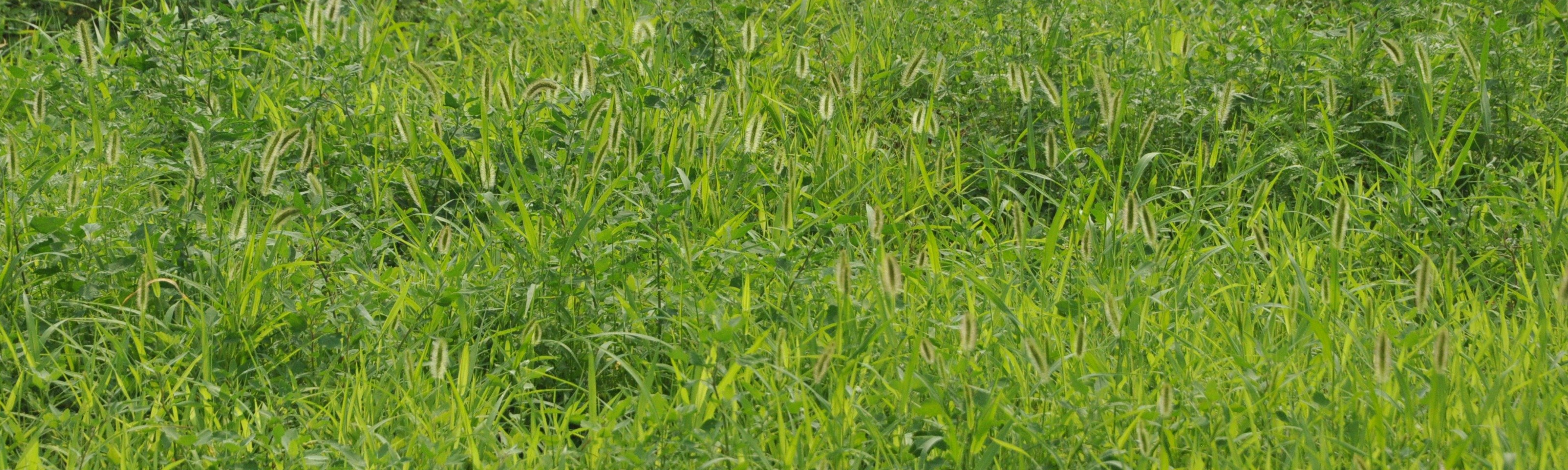
The most efficient farms are not applying more. They are applying less, but better.
There is a clear shift towards targeted application, dealing directly with the weed rather than covering everything around it. That approach reduces waste, improves accuracy, and delivers a more reliable result.
It also gives you back control.
If chemical is being applied, it should land where it is intended. Not drift onto the margins and into neighbouring land. Not affect surrounding crops. Not end up in the air and not on areas of your field that have no weeds and are being managed for productivity. Targeted application removes that uncertainty.
This is where weed wiping comes back into focus.
It has been around for decades and is widely understood in principle. But for a long time it has been underestimated, often seen as limited in capability or not suited to modern, larger-scale farming.
That perception has not kept up with reality.
From Old Concept to Precision Herbicide Application
Weed wiping as a concept dates back to the 1970s, but what matters now is how far this company has developed the systems behind it. It now has little in common with the machines of 50 years ago, evolving from a simple weed wiper into what is now classed as a precision herbicide applicator.
This development has resulted in one of the most precise and efficient methods of herbicide application available in the world. Its technical advantage is that the machine uses sensors to find the weeds and then only applies chemical directly to the weed itself, not to the rest of the crop or broadcast across the field. There is no drift, no unnecessary coverage, and no waste, with annual docks seeing up to a 97% saving over broadcast spraying.
In practical terms, it is one of the lowest cost methods of weed control because it uses significantly less chemical while delivering a consistent result.
The limitation has never been the principle.
It has been the system.
Where Most Systems Fall Short
Traditional weed wiping systems often struggle with consistency.
Application is typically delivered through a single contact point, which can lead to uneven chemical transfer across the working width. As ground conditions change or terrain varies, contact becomes inconsistent. Some weeds receive too little chemical, others too much, and operator decisions can result in drips, burnt patches, over-application, waste, and unnecessary soil damage.
That inconsistency leads to poor results, rework, and increased cost.
For many larger farms, that made weed wiping difficult to rely on. And that is why it was often dismissed.
Where Quad-X Brought Innovation and Set the Standard
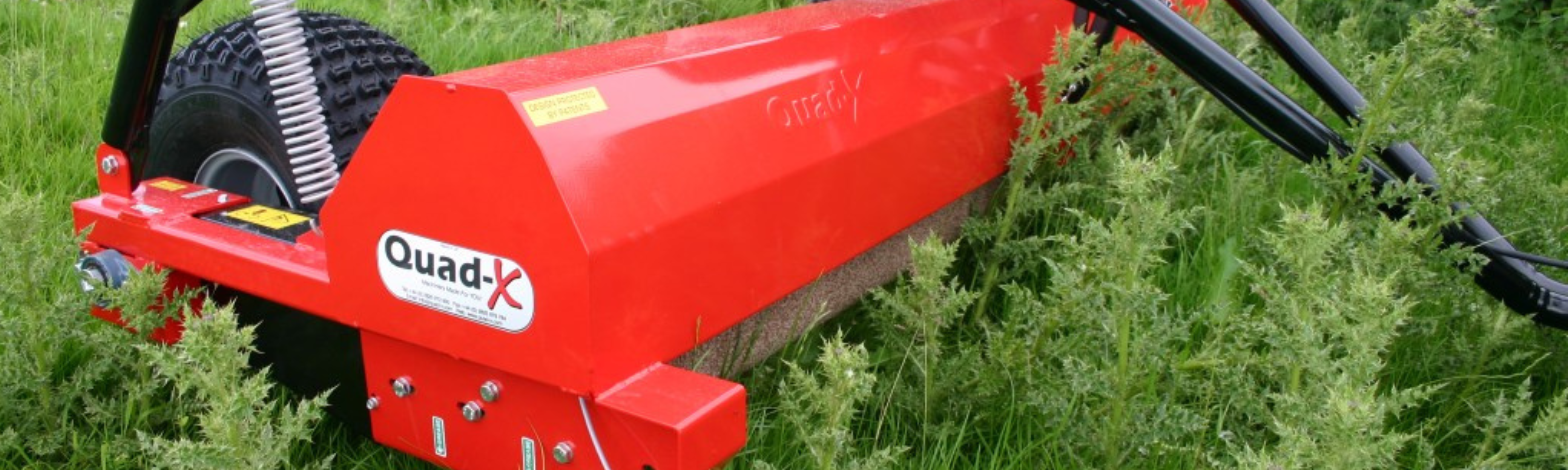
Over 20 years ago, Quad-X developed a system that fundamentally changed how weed wiping works.
Patented technology was designed to control how chemical is carried and transferred onto the plant. Rather than relying on a single point of contact, the system maintains a consistent film of chemical across the rollers, allowing even application across the full working width.
That level of control is what removed the inconsistency that held older systems back.
Alongside this, automated application systems regulate the delivery of chemical as the machine works. Output is not fixed and does not rely on constant manual adjustment. It responds to working conditions, helping to ensure that the correct volume is applied consistently.
Ground following and height control ensure that the machine maintains proper contact with the target weed, even across uneven terrain. That contact is critical. Without it, chemical is lost, and results become unpredictable.
Taken together, this is not just a weed wiper.
It is a controlled herbicide application system.
And it is that level of control that delivers consistent, repeatable results.
A Proven System, Not a New Idea
What sets Quad-X apart is not that it has recently introduced new technology.
It is that the breakthrough has already been made and refined.
While others in the market are introducing new approaches and working on incremental changes to broadcast sprayers by implementing cameras and software to identify and target application, these systems are complex and only apply to the top side of the foliage. They cannot be used effectively in windy conditions and are often associated with reliability and repeatability issues.
Early adopters of targeted broadcast spraying with cameras have also cited large, unjustifiable price tags that are out of reach for most farming operations, never mind the software subscription costs often associated with these systems.
Quad-X systems come with self-contained software and, because they have evolved over more than 20 years, they are reliable, well tested, and provide proven results.
For over three decades, Quad-X has led the development of weed wiping systems, building on proven technology and continuously improving it in real farming conditions.
This is why Quad-X is recognised as a world leader in weed wiping and vegetation control.
Machines are working not only across the UK and Ireland, but also around the world in demanding environments in Russia, Europe, Australia, and the USA. The system has been tested at scale, in varied conditions, and under real pressure.
The company’s proven systems remain focused on delivering what matters — controlled application, reliability, and proven results that protect the environment and provide improved soil health.
Lower Chemical Use. Better Results. Clear Return
What matters in practice is the outcome.
Across a wide range of farms, the results are consistent. Chemical use is reduced significantly, often by more than half, while weed control improves.
A sheep farmer in Shetland managing over 1,000 sheep has seen thistles controlled effectively using less than half the usual chemical, while also achieving zero damage to valuable clover swards, simply because the chemical is applied directly to the weed plant.
In Lancashire, an upland farmer states that a job which previously took two weeks on and off due to wind during spring spraying can now be completed in a single day, irrespective of the wind. That change alone allows grazing systems to continue without disruption.
Other farmers highlight the control it gives them, along with better grass yields compared to treatments of docks using broadcast spraying. No drift into neighbouring land. No wasted product. No uncertainty about where chemical has gone.
This is not theoretical. It is the result of a system that has been developed properly and proven over time.
At the centre of that are machines such as the Quad-X Wipeout 2, alongside the wider range including the Quad-X Weed Xterminator 2 and Quad-X Weed Destroyer.
Each is built around the same principle – control the application properly, and the results follow.
If You’re Looking at Weed Control Properly
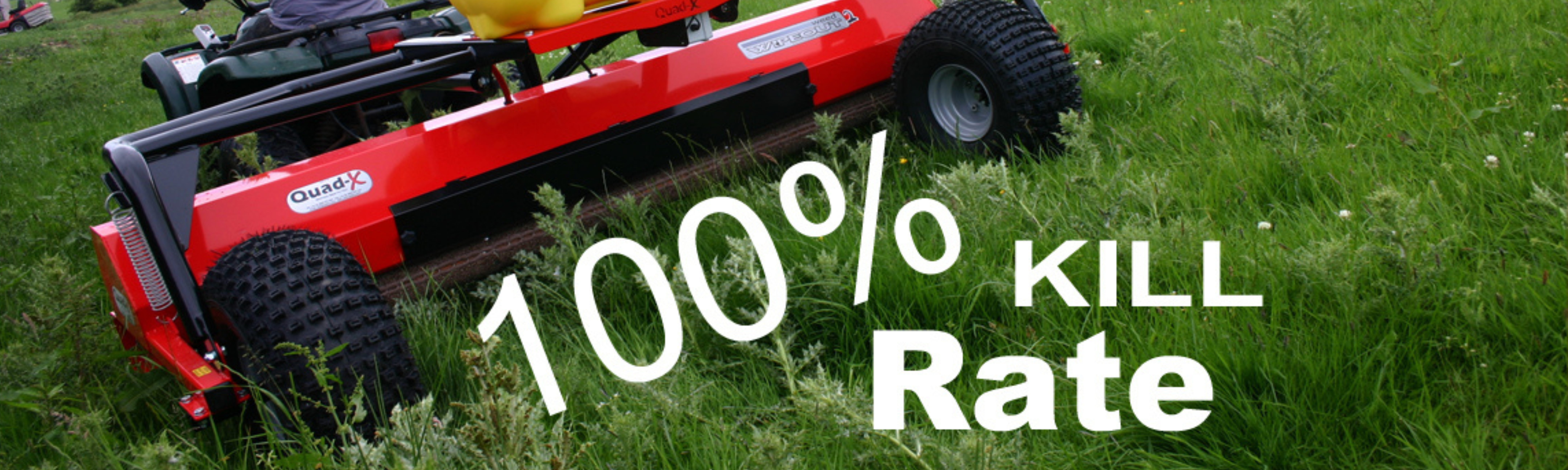
Weed wiping is no longer something on the edge of the conversation.
Used properly, it is one of the most efficient, controlled, and cost-effective methods of weed control available.
The difference is not in whether the method works.
It is in whether the system you are using is capable of delivering the level of performance that modern farming now demands.
Quad-X has spent over three decades developing that standard. Contact us today.
FAQs
What is a weed wiper?
A weed wiper is a targeted herbicide application system that applies chemical directly to weeds that sit above the crop or grass, rather than spraying across the entire field.
Is weed wiping better than spraying?
In many situations, yes. Weed wiping uses significantly less chemical, eliminates drift, and targets only the problem weeds, making it more efficient and cost-effective when conditions are suitable.
How much chemical can you save with a weed wiper?
Many farmers report reducing chemical use by 50% or more, depending on weed type, density, and application conditions.
Does weed wiping damage grass or crops?
No. Because the chemical is applied directly to taller weeds, surrounding grass or crops are largely unaffected when the system is set correctly.
Why are some weed wipers more effective than others?
The difference comes down to how well the system controls chemical application. Inconsistent machines can lead to missed weeds or over-application. Systems like Quad-X use dual rollers and controlled delivery to ensure consistent results.
Is newer camera-based weed control better?
Camera systems are emerging, but many are still unproven in real farm conditions and can come with higher cost and complexity. Proven systems like Quad-X already deliver precise, controlled application without those drawbacks.
Is weed wiping only suitable for grassland?
No. Modern weed wiping systems are used across a wide range of applications including grassland, cereals, vegetable crops, and sugar plantations. Precision herbicide application is suitable anywhere weeds sit proud of the crop and can be targeted directly.
Are Quad-X weed wiping systems suitable for large farms?
Yes. Quad-X systems are designed for farms of all sizes, with working widths available up to 8.4m / 27.5ft. The range is built to deliver controlled, consistent application across both smaller operations and large-scale commercial farming environments.